In short
We list 10 clothing manufacturers in New Zealand that make garments, knitwear or socks for other brands and organisations, from Auckland to Dunedin, each checked against its own website and the Companies Register on 10 November 2026. None publishes a minimum order figure. Local making suits small runs and a Made in New Zealand label; offshore suits 500 pieces and more per style and colour. CMB Sourcing Ltd. is in Bangladesh and is not on the list.
Want a costing for your own style? Send us your enquiry
This page lists 10 clothing manufacturers in New Zealand that make garments, knitwear or socks for other brands and organisations. On 10 November 2026 we opened each company's own website and found its company on the Companies Register. Where one exists, we also read its Buy NZ Made listing or its entry in the Fashion & Textiles NZ member directory. The country's industry is small, so the list is short on purpose. We are CMB Sourcing Ltd., a knitwear and cap manufacturer and buying house in Bangladesh. We are not a New Zealand manufacturer and we are not on this list.
10 clothing manufacturers in New Zealand, checked
Each row shows only what the company's own site or a public register said on 10 November 2026. The list is alphabetical. "Not published" means we found no figure, so ask the company.
| Manufacturer | Where | Makes | Minimum order it publishes | What we checked, and where |
|---|---|---|---|---|
| Arrow Uniforms | Hutt Valley, near Wellington (head office in Silverstream, Upper Hutt); office in Christchurch | Uniforms and workwear. Says it makes some garments in its own New Zealand factory and produces others offshore | No figure. Says its local production suits bespoke orders and short runs | Companies Register: Arrow Products NZ Limited (the seller named in its terms), number 1025357, registered, incorporated 31 March 2000. Its founder calls it a uniform manufacturer based in the Hutt Valley. No page gives the factory street address, so ask. |
| Beverley Productions | Tauriko, Tauranga | Knitwear: corporate, workwear, fashion and technical knitting, with sampling. Says it makes corporate knitwear to order | No figure. Says it supplies large or small quantities | Companies Register: Beverley Productions Limited, number 185010, registered, incorporated 30 April 1962. Listed under Manufacturing / CMT in the Fashion & Textiles NZ directory. |
| Jaedon | Manukau, Auckland | Workwear, uniforms and protective clothing. Says some is made in its Auckland factory, including arc-rated garments, and some is bought from other makers; custom garments for organisations | No figure. Says it does short production runs | Companies Register: Jaedon Enterprises Limited (the supplier named in its terms), number 9369502, registered, incorporated 9 September 2025. Listed under Manufacturing / CMT in the Fashion & Textiles NZ directory, which says Jaedon has operated since 1995. |
| Manawatu Knitting Mills | Palmerston North | Knitwear in possum merino, lambswool and merino. Says it offers custom manufacturing for clients beside its own two brands | Not published | Buy NZ Made listing with two registered product lines. Companies Register: number 467586, registered, incorporated 16 July 1990. |
| Norsewear | Norsewood, Hawke's Bay | Socks, gloves and beanies; custom or branded runs for organisations, sports teams and businesses | Not published | Companies Register: Norsewear NZ Limited, number 8507426, registered. Listed under Manufacturing / CMT in the Fashion & Textiles NZ directory. Its site says Norsewear was founded in 1963. |
| NZ Sock Co | Ashburton | Socks in merino, wool, possum and cotton; custom socks for other brands | No figure. Says it takes small runs and large orders | Companies Register: The New Zealand Sock Company Limited, number 122259, registered, incorporated 28 March 1945, registered office in Ashburton. |
| Otago Knitwear | Dunedin | Knitwear and accessories in merino, possum merino and lambswool; contract bulk knitting for retailers, designers and wholesalers | Not published | Buy NZ Made listing with 37 registered products. Companies Register: number 984019, registered, incorporated 11 October 1999, which matches the 1999 start on its site. |
| Seabreeze Apparel | Silverdale, Auckland | Designs and sews garment ranges for other businesses, from uniforms and workwear to fashion; also prints | Not published | Companies Register: Seabreeze Apparel Limited, number 6020553, registered. Listed under Manufacturing / CMT in the Fashion & Textiles NZ directory. |
| Textile Creations | Pakuranga, Auckland | Fine knitwear: garment manufacture, commission knit and make, collars, trims and bands | Not published | Companies Register: Textile Creations Limited, number 899164, registered, incorporated 18 March 1998, at the same Pakuranga address as its site. |
| Tintex | Wairau Valley, Auckland | Production samples, cutting, garment manufacturing, technical sportswear and finishing for designers, brands and retailers | Not published | Companies Register: Tintex Limited, number 8176986, registered, at a View Road address like the one on its site. Listed under Manufacturing / CMT in the Fashion & Textiles NZ directory. Its site says garments are made in Auckland and visits are by appointment. |
We left out companies whose website would not open or had expired, that have no website, that show only their own label, that do not say where their garments are sewn, or that we could not match to an entry on the Companies Register. That removed several known names, so this is not a full census of the industry. A place on this list is not a recommendation, and we have not visited these workrooms.
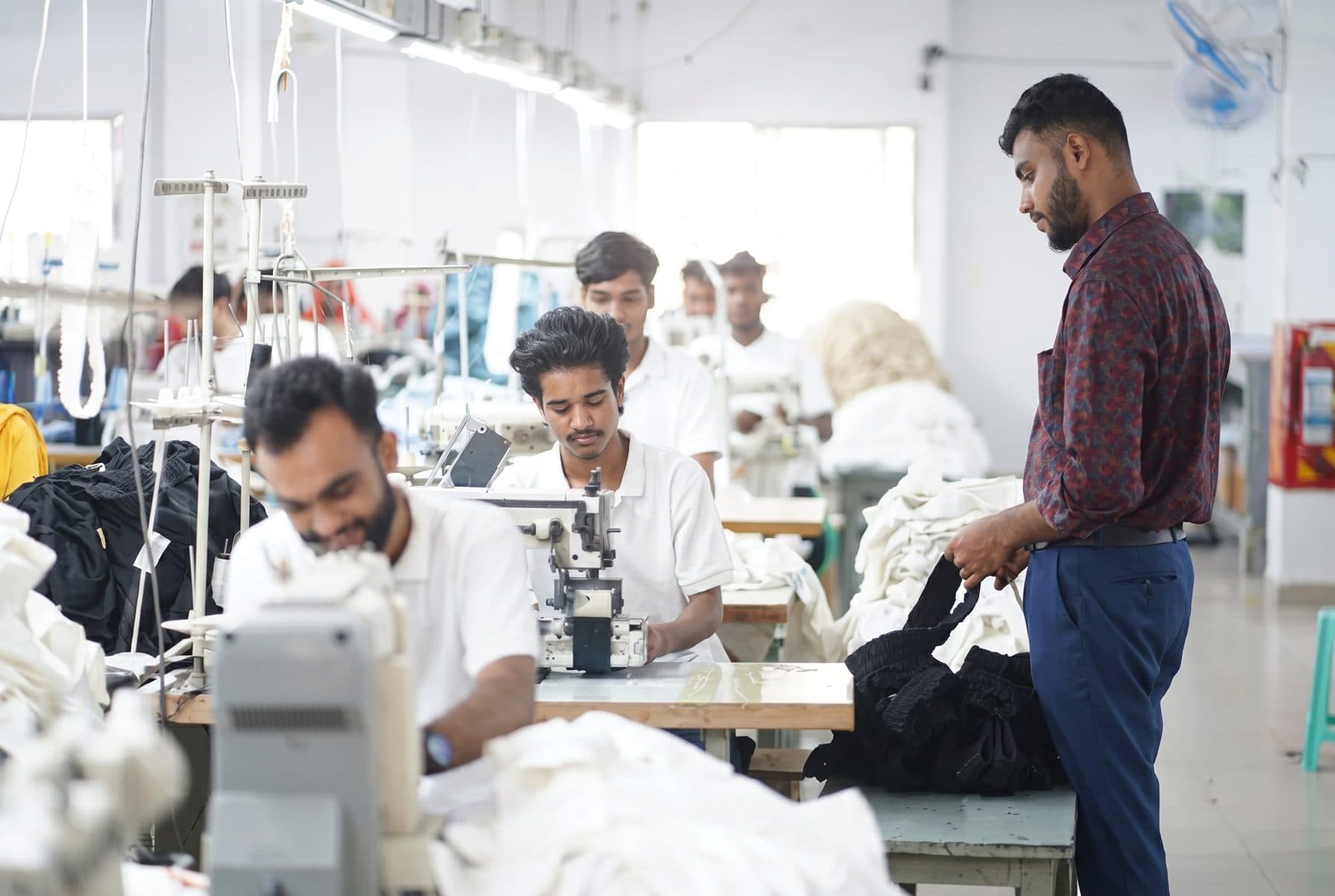
How to check a manufacturer in New Zealand yourself
- Companies Register. The Companies Office search is free. It shows whether a company is registered or removed, when it was incorporated and its registered address. It proves the company legally exists. It does not prove there is a factory, and a sole trader will not appear at all.
- Buy NZ Made licence holders. Buy NZ Made says its kiwi trademark shows that the holder has been authenticated as a genuine New Zealand producer. Its site has a licence holder search and a product check, and a company's listing shows each registered product.
- Fashion & Textiles NZ members. This industry body was called Mindful Fashion New Zealand until it announced its new name on 8 April 2026. Some members still say Mindful Fashion on their own sites. Its directory has a Manufacturing / CMT filter, which showed 11 members on 10 November 2026. Five of them are in the table above. Members agree to a charter and a code of conduct. The membership page describes a commitment, not an audit.
Then ask for the street address of the workroom, ask to visit, and ask which steps happen on site: cutting, sewing, knitting, pressing.
Made in New Zealand or made offshore: which fits your order
| Question | Made in New Zealand | Made offshore (Bangladesh, through us) |
|---|---|---|
| Order size | Small runs are normal. Four makers here say they take small or short runs. None publishes a minimum figure, so ask. | Our orders start at 500 pieces per style and colour. |
| Speed and distance | No sea leg. We found no lead time on the pages we read, so ask. | Production time plus sea freight from Chattogram, with a change of ship at a regional hub on the way. |
| The right to label "Made in New Zealand" | Yes, when it is true. The Commerce Commission says clothing is typically made where the fabric is turned into a garment. | No. The label must name the country where the garment was made. The country of design cannot stand in for it. |
| Fabric and product range | Strong in knitwear, merino and possum blends, socks, workwear and sampling: six of the 10 makers here are knitters or sock makers. | Knitwear and caps from our own factory; denim, jackets, woven shirts, workwear and socks from partner factories. Wider fabric choice at volume. |
| Cost per piece at volume | Higher, because wages are higher and runs are short. | Lower per piece once the order is big enough to carry freight and GST. We publish no prices. |
| Visits and communication | You can visit, but ask first: one maker here sees visitors by appointment only. | Email and video calls, with samples sent by courier. |
Making locally is the better choice for small runs, fast repeats, close fitting work where you want to handle each sample, and any range that needs a "Made in New Zealand" label. The Commerce Commission's fact sheet says new clothing supplied in New Zealand must carry a country of origin label, and that where a garment is made is a question of fact and degree: for clothing it is typically where the fabric is turned into a garment. A dress designed in New Zealand and sewn overseas cannot be labelled made in New Zealand. The Commission adds that kiwis, flags and other national emblems can mislead in the same way as words. The rule is in the Consumer Information Standards (Country or Territory of Origin (Clothing and Footwear) Labelling) Regulations 1992.
Making offshore is the better choice from about 500 pieces per style and colour, for knitwear basics at volume such as t-shirts, polos and hoodies, and when you need a wide choice of fabric. The cost per piece is lower, and you pay for it in time, freight and distance. Many brands do both: samples and small drops at home, volume styles offshore.
Want a factory you can check?
We name the factory that will make your order in writing before production, with its address, certificates and audit reports. Tell us what you want to make.
If you make offshore: importing clothing from Bangladesh into New Zealand
These facts come from our guide to importing clothing from Bangladesh into New Zealand, which lists its sources.
- Duty is 0%. Clothing made in Bangladesh enters under New Zealand's tariff preference for least developed countries. The normal tariff on cotton t-shirts and on men's cotton trousers and jeans is 10%.
- The goods must meet the origin rule. The last process of manufacture must be in a least developed country, and at least 50% of the factory or works cost must be spent in least developed countries or New Zealand, on materials from there or on factory costs. Materials from China, India or Vietnam do not count. The goods must be exported directly to New Zealand without entering the commerce of another country, and the claim needs a certificate of origin, a declaration of origin or other evidence.
- GST is 15%. It is charged on the value of the goods plus any duty plus freight and insurance. A shipment with a Customs value of more than 1,000 New Zealand dollars needs a Customs client code and an import declaration.
- Labels are compulsory. Clothing needs a country of origin label, and most new clothing needs fibre content and care labels too. The origin and care labels must be in English, and the origin label must be permanent, with letters at least 1.5 mm high.
Bangladesh is due to leave the least developed country group on 24 November 2029. Our guide records that New Zealand's High Commissioner said in May 2026 that New Zealand is keen to continue duty-free access after that date. That is an assurance, not a tariff line.
Where we fit
CMB Sourcing Ltd. is a knitwear and cap manufacturer and garments buying house in Narayanganj, Dhaka, Bangladesh. Knitwear and caps (t-shirts, polos, hoodies and sweatshirts, activewear, sportswear and team kits, underwear and loungewear, swimwear, kidswear and babywear, caps and headwear) are made in our own factory, the factory of our sister company, Collective Studio Ltd. Everything else (denim, jackets, woven shirts, workwear, socks) is sourced from audited partner factories that we name to you before production. Our orders start at 500 pieces per style and colour; denim, jackets, woven shirts and workwear start at 2,000, and underwear and socks at 5,000. Runs from 150 pieces are taken by our sister company, Collective Studio Ltd. We have no office outside Bangladesh and we publish no prices.
Send us your tech pack or a reference garment and we will tell you whether your order suits us, our sister company, or one of the New Zealand makers above.
Questions buyers ask.
Are there still clothing manufacturers in New Zealand?
Yes, but not many, and most are specialists. On 10 November 2026 we could open the websites of 10 companies that say they make clothing, knitwear or socks in New Zealand for other brands or organisations, and we found each one on the Companies Register. Six are knitters or sock makers, in Tauranga, Palmerston North, Norsewood, Ashburton, Dunedin and Auckland. Two are Auckland workrooms that sample and sew ranges for designers and businesses. One Auckland factory makes technical workwear, and one uniform company in the Hutt Valley, near Wellington, says it still makes some garments locally. Several other names are known in the trade, but their websites had expired or would not load when we checked, or we could not match them to a registered company, so we left them out.
What is the minimum order for a clothing manufacturer in New Zealand?
None of the 10 manufacturers on this page publishes a figure. NZ Sock Co says it takes small runs and large orders, Jaedon says it does short production runs, Beverley Productions says it supplies large or small quantities, and Arrow Uniforms says its local production suits bespoke orders and short runs, all without a number. The other six say nothing about order size on the pages we read. So ask each maker in writing for the minimum per style and per colour, and ask whether a small run carries a surcharge. For comparison, our own orders in Bangladesh start at 500 pieces per style and colour, and our sister company takes runs from 150 pieces.
When can I label clothing Made in New Zealand?
When it is true and you can prove it. The Commerce Commission says where a product is made is a question of fact and degree, and that for clothing it is typically where the fabric is turned into a garment. A garment designed in New Zealand but sewn overseas cannot carry a made in New Zealand label. The Commission also warns that kiwis, flags and other national emblems can give a false impression of origin. Separately, new clothing supplied in New Zealand must carry a permanent country of origin label in English with letters at least 1.5 mm high. The fact sheet gives fines of up to 30,000 New Zealand dollars per breach for a company that breaks the labelling standard, and up to 600,000 dollars per breach for a misleading origin claim.
Do I pay import duty on clothing from Bangladesh in New Zealand?
Not if the goods qualify. Clothing made in Bangladesh enters New Zealand at 0% under the tariff preference for least developed countries. The normal tariff on cotton t-shirts and on men's cotton trousers and jeans is 10%. To qualify, the last process of manufacture must be in a least developed country and at least 50% of the factory or works cost must be spent in least developed countries or New Zealand. Materials from China, India or Vietnam do not count towards the 50%. The goods must be exported directly to New Zealand, with a certificate of origin, a declaration of origin or other evidence. GST of 15% still applies, charged on the value of the goods plus any duty plus freight and insurance. Our New Zealand guide sets out the rules and their sources, and a customs broker should confirm them for your shipment.
Should a New Zealand brand make locally or offshore?
Start with the number of pieces. For a few dozen pieces per style, a local workroom is usually the only practical route: four of the makers on this page say they take small or short runs, you can visit, and you can label the result made in New Zealand if it is sewn here. Local makers are also the natural choice for merino and possum merino knitwear, socks and technical workwear, because those are what the remaining factories do. From about 500 pieces per style and colour, offshore production costs less per piece, at the price of a larger minimum, 15% GST at the border and weeks at sea on one of the longest routes we plan. Many brands split the range: samples and small drops at home, volume t-shirts, polos and hoodies offshore.
Sources
Checked . Rules and figures change, so confirm anything that affects your pricing.
- New Zealand Companies Register (Companies Office): company status, number, incorporation date and registered address (opens in a new tab)
- Buy NZ Made, licence holder search: which companies and products are licensed to use the kiwi trademark (opens in a new tab)
- Buy NZ Made: what the kiwi trademark licence shows about a holder (opens in a new tab)
- Fashion & Textiles NZ (formerly Mindful Fashion New Zealand), member directory: members by category, including Manufacturing / CMT (opens in a new tab)
- Fashion & Textiles NZ, Introducing Fashion & Textiles New Zealand (8 April 2026): the change of name from Mindful Fashion New Zealand (opens in a new tab)
- Fashion & Textiles NZ, membership expectations: what members agree to (opens in a new tab)
- Consumer Information Standards (Country or Territory of Origin (Clothing and Footwear) Labelling) Regulations 1992, version as at 1 May 2024: the permanent label, English, letters at least 1.5 mm high (opens in a new tab)
- Commerce Commission, Country of origin labelling for clothing and footwear: label requirements and fines (opens in a new tab)
- Commerce Commission, fact sheet Country of origin labelling for clothing and footwear (October 2018): who must label, what the label must say, where clothing is made, symbols, penalties (opens in a new tab)
- Commerce Commission, Reminder to businesses about Made in New Zealand claims (14 May 2018): the test for clothing and the rule on symbols (opens in a new tab)
- Fair Trading Act 1986, section 40, version as at 1 July 2026: the maximum fines (opens in a new tab)
- CMB Sourcing Ltd., Importing clothing from Bangladesh into New Zealand: duty, origin rule, GST and labelling, with their official sources (opens in a new tab)