Apparel products made in Bangladesh, in our own factory and audited partner factories
From lightweight jersey tees to fine-gauge knitwear and seam-sealed jackets. Knitwear such as T-shirts, polos and hoodies, and caps, are made in our own factory; every other category in an audited partner factory that specialises in it.
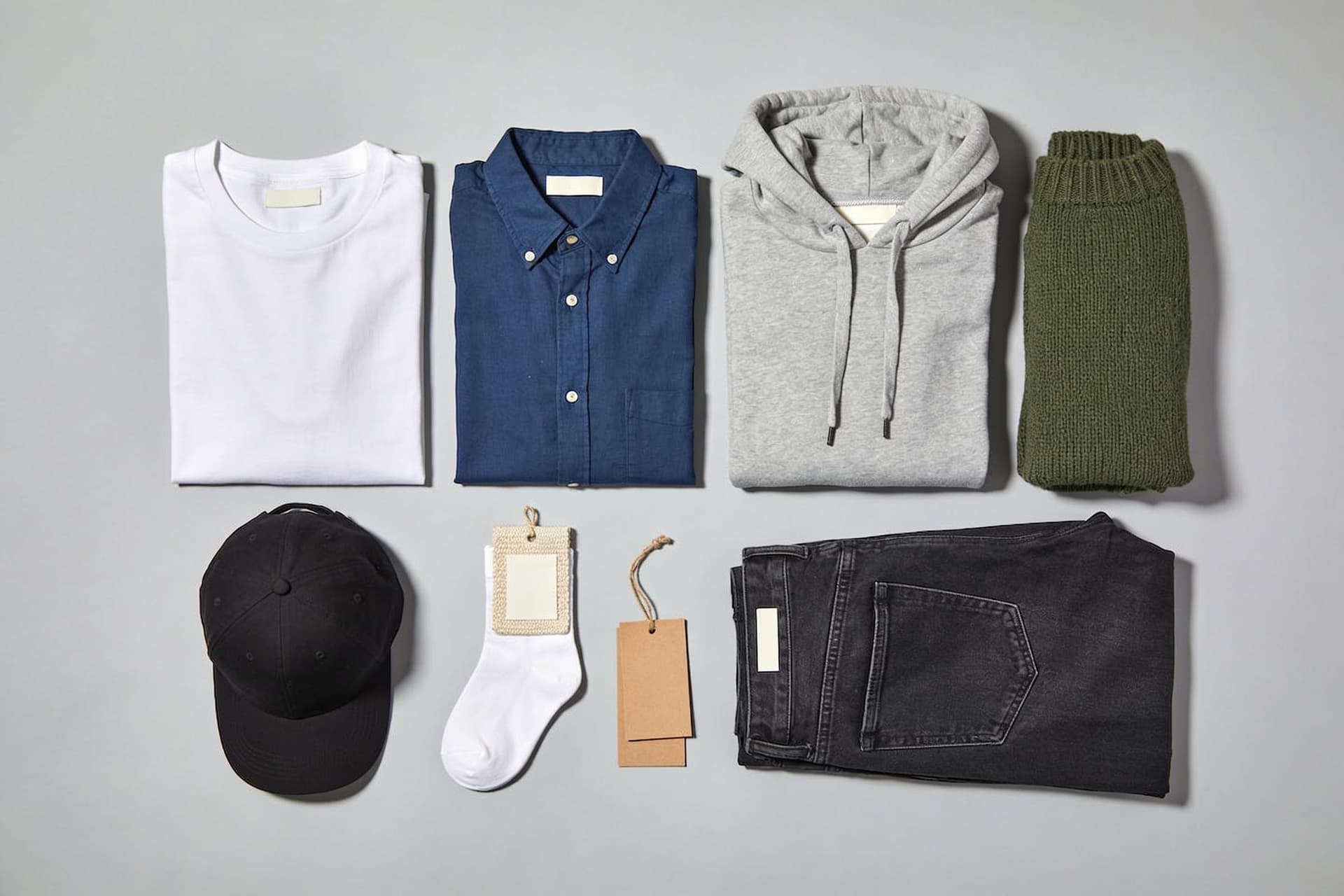
We are a manufacturer and buying house: we make knitwear and caps in our own factory, and place every other category below with one of the clothing manufacturers in Bangladesh that specialises in it. Either way we stay responsible for the order from the first sample to shipment.
- T-shirtsMinimum 500 pieces
- Polo shirtsMinimum on your quote
- Hoodies and sweatshirtsMinimum 500 pieces
- Sweaters and knitwearMinimum on your quote
- DenimMinimum 2,000 pieces
- Jackets and outerwearMinimum 2,000 pieces
- Activewear and sportswearMinimum on your quote
- SwimwearMinimum on your quote
- Kidswear and babywearMinimum on your quote
- Underwear and loungewearMinimum 5,000 pieces (underwear)
- Workwear and uniformsMinimum 2,000 pieces
- Woven shirts and bottomsMinimum 2,000 pieces (woven shirts)
- Caps and headwearMinimum on your quote
- SocksMinimum 5,000 pairs
- Sportswear and team kitsMinimum on your quote
Minimums
Our own orders start at 500 pieces per style and colour, which is also our minimum for t-shirts and hoodies. Denim, jackets, woven shirts, workwear and uniforms start at 2,000 pieces; underwear at 5,000 pieces; socks at 5,000 pairs. Minimums are per style and colour; where a card says “on your quote”, the exact minimum is confirmed with your quote.
Prices
Every style is quoted from your tech pack or a reference garment, because fabric, weight, decoration, quantity and shipping terms set the price.
Fewer than 500 pieces?
Our sister factory takes smaller knit and cut-and-sew runs and quotes them separately: how small orders work.
How we match a product to a factory
The categories on this page come from four different kinds of factory. Tees, polos, fleece and activewear come from knit composites that make their own jersey; shirts, trousers and jackets from woven units; jeans from a factory with its own wash plant; and sweaters from flat-knitting machines, not sewing lines.
The product decides the kind of factory first. Then come the audits and certificates your market requires, and finally quantity, because a factory built for tens of thousands of pieces a week will not give a small order proper attention. Making that match is what our buying house does.
What decides the price
Fabric is the largest line in almost every costing, close to half the price of a basic garment, so fabric weight, composition and certification move the number most. Construction comes next: every extra panel, pocket or topstitch adds sewing operations. Washes, prints and embroidery are costed separately, and small quantities carry their set-up costs over fewer pieces.
Whether you supply the fabric changes the price too — see the production models. Our cost guide shows the split by product using published data, and each category page below lists typical fabrics and finishes.
Fabrics and standards by product.
Each category page gives its minimum order; prices are quoted per style. Delivery dates depend on the fabric, the decoration and the season, so they are confirmed in writing with your order.
| Product | Typical fabrics | Standards buyers often ask for |
|---|---|---|
| T-shirts | Single jersey 140–180 GSM; Midweight jersey 180–220 GSM; Heavyweight jersey 240–300 GSM | OEKO-TEX® STANDARD 100, GOTS, GRS |
| Polo shirts | Single and double piqué 180–240 GSM; Cotton interlock; Jersey polos 180–220 GSM | OEKO-TEX® STANDARD 100, WRAP, amfori BSCI |
| Hoodies and sweatshirts | French terry (loopback) 280–380 GSM; Brushed fleece 300–450 GSM; Heavyweight fleece up to 500 GSM | OEKO-TEX® STANDARD 100, GOTS, GRS |
| Sweaters and knitwear | Cotton and organic cotton yarn; Acrylic and acrylic blends; Merino and lambswool blends | OEKO-TEX® STANDARD 100, RWS, RDS and RAF animal fibre standards, GRS |
| Denim | Rigid denim 12–14.5 oz; Comfort stretch 9–12 oz; Lightweight chambray 5–8 oz | OEKO-TEX® STANDARD 100, ZDHC MRSL and Wastewater Guidelines, Higg Facility Environmental Module (FEM) |
| Jackets and outerwear | Nylon and polyester taffeta and ripstop; Recycled polyester shells (GRS); Cotton twill and canvas | RWS, RDS and RAF animal fibre standards, GRS, bluesign® |
| Activewear and sportswear | Polyester–elastane interlock 180–280 GSM; Nylon–elastane for compression; Recycled polyester (GRS) | GRS, OEKO-TEX® STANDARD 100, bluesign® |
| Swimwear | Nylon–elastane tricot 160–220 GSM; Polyester–elastane, including chlorine-resistant blends; PBT polyester for pool and training wear | GRS, OEKO-TEX® STANDARD 100, amfori BSCI |
| Kidswear and babywear | Organic cotton jersey and interlock; Cotton rib and waffle knits; Muslin and double gauze | OEKO-TEX® STANDARD 100, GOTS, CPSIA and Children’s Product Certificate |
| Underwear and loungewear | Cotton–elastane jersey and rib; Modal and micromodal; Bamboo viscose | OEKO-TEX® STANDARD 100, GOTS, FSC® chain of custody |
| Workwear and uniforms | Polyester–cotton twill 200–300 GSM; Cotton canvas and duck; Ripstop and stretch workwear fabrics | Workwear and PPE standards, ISO 9001, ISO/IEC 17025 accredited lab testing |
| Woven shirts and bottoms | Cotton poplin and broadcloth; Oxford and pinpoint oxford; Yarn-dyed checks and stripes | OEKO-TEX® STANDARD 100, amfori BSCI, Sedex SMETA |
| Caps and headwear | Cotton twill and brushed twill; Corduroy and canvas; Nylon and recycled polyester | OEKO-TEX® STANDARD 100, GRS, amfori BSCI |
| Socks | Combed cotton; Organic cotton; Bamboo viscose | OEKO-TEX® STANDARD 100, GOTS, GRS |
| Sportswear and team kits | Polyester interlock 140–160 GSM; Birdseye and micro-mesh 130–150 GSM; Warp-knit mesh 110–140 GSM | OEKO-TEX® STANDARD 100, GRS, amfori BSCI |
From fibre to finished garment.
The fabric decides the price, the hand-feel and which certificates you can claim. These are the most common bases.
Printing, embroidery and finishing.
Decoration is quoted on the same costing as the garment, as its own line, and each method has its own page on artwork and cost.
Questions about our products.
Can you make a product that is not listed on your site?
Usually, yes: the categories on this page are the main ones we make and source, not a limit. Headwear has its own page, covering caps, beanies and bucket hats. We also quote aprons, scarves and promotional textiles, and products that sit between categories, such as heavyweight overshirts or lined utility trousers. What decides feasibility is not the category name but three practical things: whether a Bangladeshi factory has the right machinery, whether the fabric is available locally or can be imported without wrecking the lead time, and whether your quantity justifies the set-up. Our own orders start at 500 pieces per style and colour. Tell us the product, the fabric you have in mind and roughly how many pieces you need, and we will tell you honestly whether Bangladesh is the right place to make it. If it is not, we will say so rather than take the order.
How do you decide which fabric suits my product?
We start from how the garment will be used and sold, then work back to the fabric. Weight comes first, because it sets the hand-feel and the price: a 140 GSM tee and a 240 GSM tee are different products at different price points. Then composition, which decides performance, shrinkage and any claims you want to make on the label. Then finish and dye method, which affect colour consistency and how the garment ages. If your buyer requires organic or recycled claims, the fabric must come from a certified supply chain with transaction certificates for your shipment, which narrows the options and changes the cost. Ask for physical swatches of the shortlisted options before sampling so you can judge feel, opacity and colour yourself, and allow for courier time when you plan the first proto.
Do you work with shirt manufacturers in Bangladesh?
Yes for woven shirts, which we place with partner factories that specialise in them, because a woven shirt and a knitted polo come from different factories. Woven shirts in poplin, oxford, yarn-dyed checks, flannel and linen come from woven units, with a minimum of 2,000 pieces per style and colour. Polo shirts in piqué and interlock are knitwear, made in our own factory; our orders start at 500 pieces per style and colour, with the exact minimum confirmed on your quote. T-shirts have a minimum of 500 pieces per style and colour. We publish no prices: fabric, weight, decoration, quantity and shipping terms set each one. The woven shirt, polo shirt and t-shirt pages list fabrics and finishes; send us a tech pack and we will quote your shirt.
What is the minimum order for clothing made in Bangladesh?
Our own orders start at 500 pieces per style and colour, which is also our minimum for t-shirts and hoodies, and several categories have higher minimums: denim, jackets, woven shirts, workwear and uniforms start at 2,000; underwear at 5,000 pieces; and socks at 5,000 pairs, all per style and colour. For categories without a figure of their own, such as polos and sweaters, the 500-piece floor applies and the exact minimum is confirmed in writing with your quote, because fabric and decoration change it: a custom dye lot needs more pieces than a stock colour. Minimums count per style and colour, so three colours of one t-shirt means 500 of each. Smaller knit and cut-and-sew runs, from 150 pieces per style and colour, go to our sister company in Narayanganj, Collective Studio Ltd., which quotes them separately; the low-MOQ pages explain that route and what it suits.
What is the difference between knit and woven clothing, and why does it matter?
Knit clothing is made from fabric formed of interlocking loops, which stretches, and woven clothing from fabric with threads crossed at right angles, which holds its shape; the difference decides which factory, fabric source and customs chapter your product falls under. T-shirts, polos, hoodies, activewear and underwear are knits, made in knit composites that often produce their own jersey. Shirts, trousers, jackets and workwear are wovens, made in woven units with different machines and sewing skills. Fabric supply differs too: local mills meet about 85% of Bangladesh’s knit fabric demand but only about 40% of woven, so a woven order more often waits on imported cloth. Customs follows the same line, with knitted garments in chapter 61 and woven garments in chapter 62, and duty rates can differ between them. A range that mixes both is usually made in two factories. Name the fabric as well as the garment when you ask for a quote.
Can you match one brand colour across different products and fabrics?
One brand colour can be matched across different products, but it has to be approved fabric by fabric, because the same colour reads differently on jersey, fleece, rib, twill and polyester. The method is a single colour standard, usually a Pantone reference or a physical swatch you supply, and a lab dip on every fabric in the range. Approve the lab dips side by side under the same light, since a fleece and a jersey that each look right alone can clash on the rail. Trims follow the same standard: rib, drawcords, thread and zips each need approval. Where products come from different factories, one set of approved colour standards is agreed for every site to work to. Cotton and polyester take different dyes, so agree in advance how close a match you will accept. Each custom colour is its own dye lot, and the minimum applies per style and colour.
Are clothes made in Bangladesh safe to wear, and which chemical limits apply?
Clothes made in Bangladesh are as safe to wear as the specification and testing behind them: chemical safety is set by the law of the country where a garment is sold, not where it is sewn. In the EU, REACH Annex XVII restricts azo dyes that can release listed aromatic amines above 30 mg/kg in textiles with direct and prolonged skin contact, restricts nickel release from metal parts such as zips and rivet buttons, and since 1 November 2020 limits the substances listed in its Appendix 12 in clothing and footwear sold to consumers. Great Britain kept these restrictions in its own version of REACH. The United States adds a lead limit of 100 parts per million for children’s products. Meeting them works the same way for every product: name the market and the retailer’s restricted substances list in the tech pack, buy fabric and trims with test reports, and test at an accredited laboratory.
Tell us what you want to make.
Send a tech pack, a sketch or a photo of a garment you like. We reply within one working day with questions or a first costing.
- A reply within one working day
- An enquiry, not an order: you are committed to an order only when you sign the written order confirmation
- Certificates and audit reports shared before production
- AQL final inspection report before you approve shipment
- Your patterns and artwork never shown to or reused for other buyers