Why manufacture clothing in Bangladesh
Bangladesh is one of the world’s largest garment exporters. Here is what that means for your cost, compliance and delivery — and what to plan around.
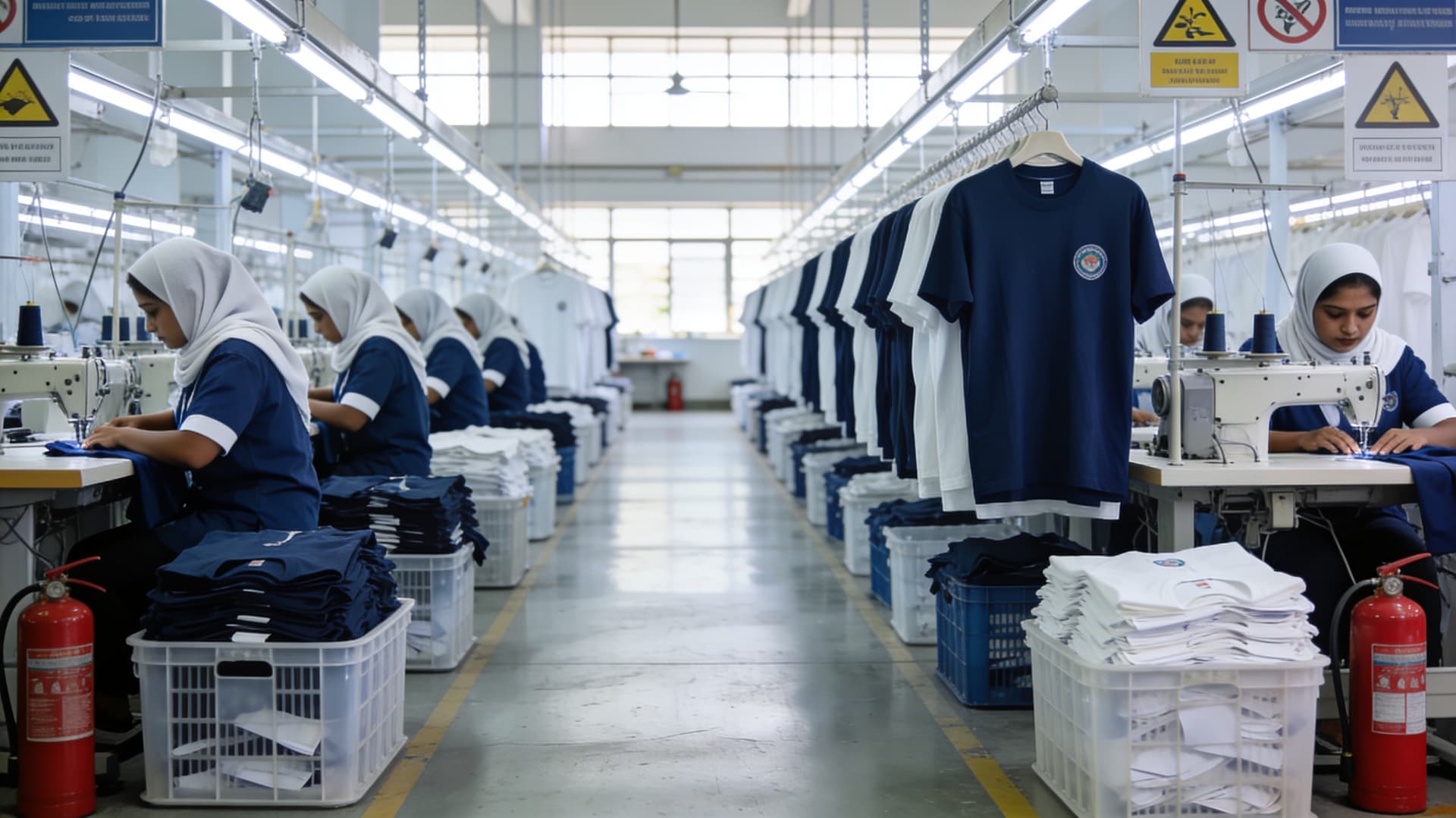
- One of the largest garment exporters
- Bangladesh ranks among the world’s top garment-exporting countries, with thousands of export factories across knit, woven, denim and sweaters.
- 284 LEED-certified factories
- As of May 2026, Bangladesh had 284 LEED-certified garment factories, 121 of them rated Platinum — more green factories than any other country.
- Duty-free into the EU
- Apparel from Bangladesh enters the EU duty-free under Everything But Arms. After LDC graduation, scheduled for 24 November 2026, preferences continue through a three-year transition.
- Independent safety inspections
- Since 2013, export factories have been inspected for structural, fire and electrical safety — today by the RMG Sustainability Council and the government’s National Initiative.
- Cotton and knit strength
- Local spinning, knitting and dyeing capacity keeps cotton knit lead times short, from basic tees to heavyweight fleece.
- Competitive cost
- Labour and overhead costs remain lower than in China and many other sourcing countries, especially for high-volume basics.
Where production happens.
We place orders across Bangladesh’s main manufacturing regions, choosing the area that fits your product and shipping route.
- Dhaka
- Our office, sample room and merchandising team. Close to buying offices, testing labs and the airport.
- Gazipur
- The largest cluster of export knit and woven factories, including many LEED-certified plants.
- Narayanganj
- Historic textile centre known for knitwear, hosiery and fleece production.
- Ashulia and Savar
- Dense manufacturing belt for knit, woven and denim, near the Dhaka EPZ.
- Chattogram
- The main sea port. Home to woven, outerwear and sweater factories and the Chattogram EPZ.
- Export Processing Zones
- BEPZA-run zones such as Dhaka, Chattogram, Karnaphuli and Adamjee, with streamlined customs.
Strengths.
- Cotton knits: t-shirts, polos, fleece and babywear
- Denim, with modern laser and ozone wash plants
- Sweaters and flat knits in every gauge
- High-volume basics at competitive prices
- Duty-free access to the EU and several other markets
- The world’s largest number of LEED-certified garment factories
Plan around.
- Longer sea transit than from nearby sourcing countries — build in buffers, or use air for urgent drops
- Synthetic and technical fabrics are often imported, which adds lead time
- Peak season, roughly July to October, books factory capacity early
- LDC graduation in November 2026 changes trade preferences over the following years
- National holidays such as Eid pause production for several days
Trade access after 2026.
Bangladesh’s graduation from Least Developed Country status is scheduled for 24 November 2026. The EU keeps its duty-free Everything But Arms preferences for a three-year transition. What this means for buyers.
Sources: New Age — Total number of LEED-certified RMG factories now 284 (May 2026) (opens in a new tab); International Accord — Bangladesh factories (opens in a new tab).
Tell us what you want to make.
Send a tech pack, a sketch or a photo of a garment you like. We reply within one working day with questions or a first costing.
- One merchandiser responsible for your order
- Certificates and audit reports shared before production
- AQL final inspection report before you approve shipment
- NDA signed on request before you share designs