In short
This page lists 18 clothing manufacturers in the USA, from California to New York. We read each company’s website and looked it up in public records on 10 November 2026. Published minimums run from none to 1,000 pieces or more per style. Making in the USA suits small runs, fast repeats and a “Made in USA” label. Making offshore suits 500 pieces or more per style and colour. CMB Sourcing Ltd. is in Bangladesh and is not on the list.
Want a costing for your own style? Send us your enquiry
This page lists 18 clothing manufacturers in the USA that cut and sew, or knit, garments for other brands. We opened each company’s own website on 10 November 2026 and recorded only what it says. Then we looked for the company in a public register or an industry directory, and where we found no match the table says so. We are CMB Sourcing Ltd., a knitwear and cap manufacturer and buying house in Bangladesh. We are not an American manufacturer and we are not on this list.
18 clothing manufacturers in the USA, checked
The list is alphabetical and is not a ranking. Each row gives the company’s own words for what it makes and the minimum order it publishes, then the outside record we found for it.
| Manufacturer | Where | Makes | Minimum order it publishes | What we checked, and where |
|---|---|---|---|---|
| Apparel Production Inc. | New York, New York (Garment District) | Private label T-shirts, hoodies, sweaters, sweatpants, suits and jackets. No denim in the USA. Also offers production in China, Indonesia and the Dominican Republic. | 200 pieces per style in 3 colours for New York production | FTC RN 123269: Apparel Production Inc., manufacturing, 270 West 39th Street, New York, as on its site. |
| Argyle Haus of Apparel | San Fernando, California (Los Angeles area) | Athletic wear, lingerie, menswear, outerwear, swimwear, uniforms and womenswear. Says it owns its factory. | No single figure. Says “relatively low”, and that runs for online retailers are generally around 500 pieces per style or more. | FTC RN 153524: Argyle Haus of Apparel, Inc., 429 Jessie St, San Fernando, as on its site. |
| Clothier Design Source | St Paul, Minnesota | Functional clothing, from design to production: athletic, outdoor, medical and military. | 1,000 pieces or more per style for in-house manufacturing | Minnesota Secretary of State: Clothier Design Source, LLC, active, filed 19 January 2010. |
| Expert Apparel Manufacturing (EAM) | Dallas, Texas | Women’s ready to wear, swimwear, athletic wear and menswear, with patterns and samples in house. | Says “No Minimums” | Texas Comptroller: Expert Apparel Manufacturing, Inc., active, registered 7 July 2017. |
| Gil Sewing Corp. | Morton Grove, Illinois (Chicago area) | Uniforms, tailored clothing, shirts, trousers, coats, knits and fire-resistant garments. Also has partner factories overseas. | Not published | Federal contractor registration, as published by HigherGov: Gil Sewing Corp, Morton Grove, Illinois, cut and sew apparel contractor, registered until 15 December 2026. No RN entry found. Illinois register not checked. |
| In Style USA | New York, New York (Garment District) | Private label and contract work: patterns, samples, sewing and full package production. | Says “We do not have any minimums” | CFDA directory: In Style USA, Inc., 307 West 36th Street, as on its site. No RN entry found. |
| ISAIC (Industrial Sewing and Innovation Center) | Detroit, Michigan | Nonprofit institute for apparel and textile manufacturing. Offers contract manufacturing at its Detroit headquarters. Its site names no garment types. | Not published | FTC RN 162947: Industrial Sewing and Innovation Center, manufacturing, women’s apparel, Detroit, at a different address from its site. |
| Lefty Production Co. | Los Angeles, California | Menswear, womenswear, childrenswear, swimwear, athletic wear, lingerie and bridal. | No figure. Says “low minimums” for clients who develop garments with it. | FTC RN 140105: Lefty Production Co. LLC, manufacturing, Los Angeles, at a different address. The CFDA directory gives the address on its site. |
| Opportunity Threads | Morganton, North Carolina | Worker-owned cut and sew plant. Says it can sew most products. No printing or embroidery in house. | 250 units per style in general; 500 where the price per unit is low | B Corp directory: Opportunity Threads, LLC, certified since January 2023. |
| Portland Garment Factory | Portland, Oregon | Custom cut and sew manufacturing, product development and prototyping. | Not published | B Corp directory: Portland Garment Factory, certified since August 2019. |
| Rightfully Sewn | Kansas City, Missouri | Nonprofit. Apparel production. The client supplies fabric and trims. | 40 to 400 units for a small run; 1,000 or more for large scale | IRS data on ProPublica Nonprofit Explorer: Rightfully Sewn Inc, 501(c)(3), exemption issued April 2021. |
| Royal Apparel | Hauppauge, New York (Long Island) | Knit T-shirts, tanks, fleece, sweatshirts and activewear, sold wholesale under its own label, with a private label service. Says it knits, dyes, cuts and sews, with domestic and imported yarns. | Private label in its stock fabrics and colours: 400 to 1,200 units per colour for fleece, 800 to 1,800 for other fabrics. More for a custom colour. | Its own site, which gives its headquarters as 91 Cabot Court, Hauppauge. No RN record found at that address; New York register not checked. ASI Central reported in January 2026 that it had bought a second Hauppauge building for manufacturing. |
| Saitex USA | Vernon, California (Los Angeles area) | Jeans. The Los Angeles factory of a denim group based in Vietnam. Gives its annual capacity as 720,000, with no unit. | Not published | CFDA directory: Saitex USA, 6074 Malburg Way, Vernon. Its own site says only “LA, USA”. B Corp directory: Saitex Group, certified since June 2019. |
| Sew Co. | Asheville, North Carolina | Design, patterns, prototypes and production of most sewn products. | No figure. Says it “can offer low minimums” but prefers clients with consistent work. | CFDA directory: Western Carolina Sewing Company (Sew Co.), 240 Clingman Ave Ext, Asheville. |
| Sew Valley | Cincinnati, Ohio | Nonprofit sample room and factory. Knit and woven garments in mid-weight fabrics. No silk, lace, heavy denim or leather. | More than 10 and under 100 units per style | IRS data on ProPublica Nonprofit Explorer: Sew Valley, 501(c)(3), exemption issued September 2017. |
| Sonrise Apparel Services | Dallas, Texas | Contract cutting and sewing, from product development to finishing. | Not published. Says its ideal customer has consistent or large volume. | Texas Comptroller: Sonrise Apparel Services, LLC, active, registered 28 April 2005, 9864 Monroe Dr, as on its site. |
| Tailored Industry | Brooklyn, New York | Knitwear made on demand on 3D knitting machines, with the brand’s own label. Works through annual membership plans. | Says “Zero Minimums” | CFDA directory: Tailored Industry, 140 58th Street, Brooklyn. No RN entry found. |
| The Evans Group (TEG) | Los Angeles, California | Menswear, womenswear, activewear, dresses, bridal and kidswear. Patterns and fit in its own studio. Also offers production overseas. | 10 to 50 pieces per style (“Studio Level”); 50 or more (“Factory Level”, made through a network of California manufacturers) | CFDA directory: The Evans Group, 1321 Palmetto Street, as on its site. No RN entry found. |
Four are in California, four in New York, two in Texas and two in North Carolina. Illinois, Michigan, Minnesota, Missouri, Ohio and Oregon have one each. Three are nonprofits. Ten publish a minimum, from “no minimums” to 1,000 pieces or more per style, and eight publish no figure. Minimums change, so read the company’s site again before you write to it.
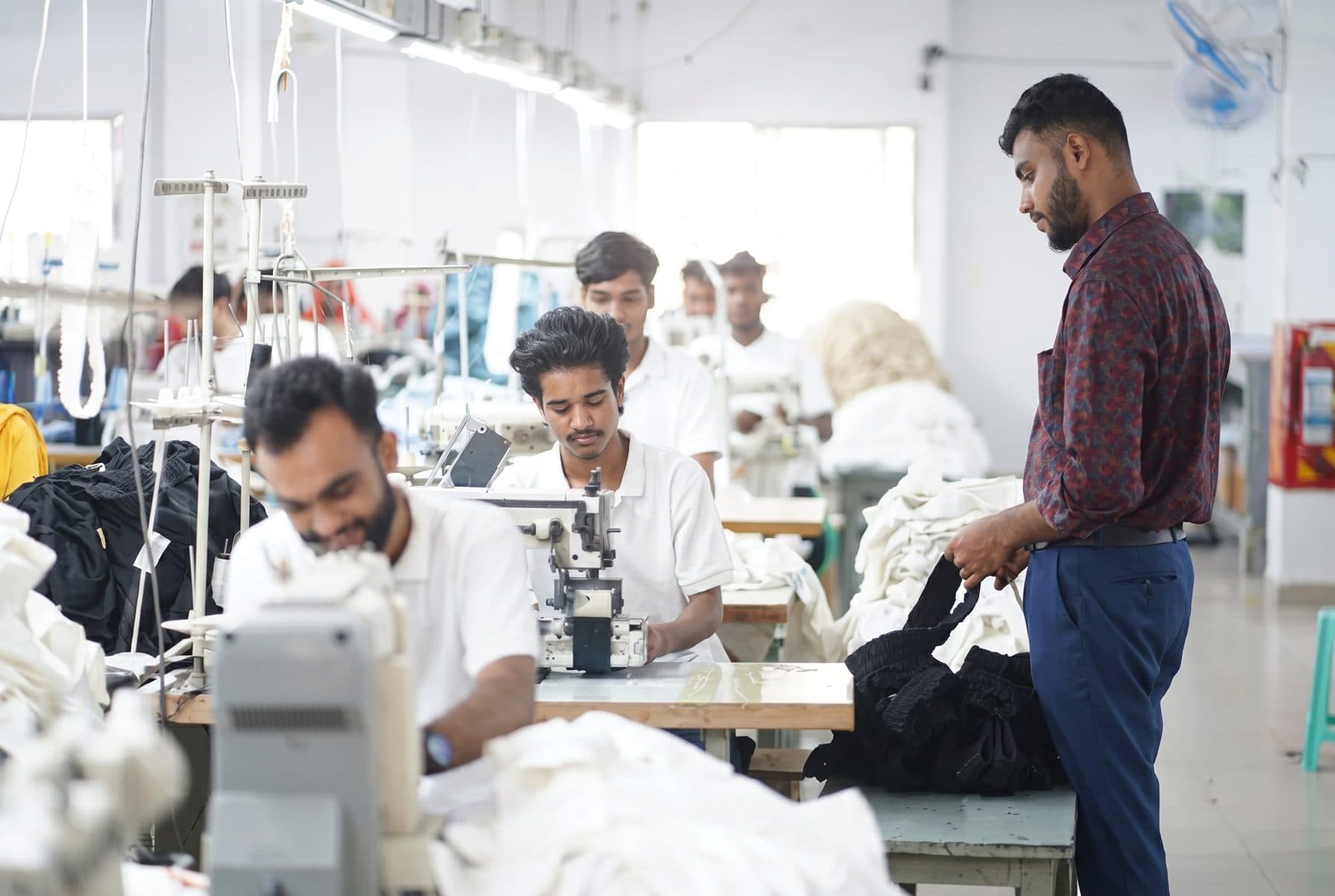
How to check a manufacturer in the USA yourself
Each of these records is free to search. Each proves one thing and no more.
- The FTC RN database. An RN is a number the Federal Trade Commission issues to a US business that makes, imports, distributes or sells textile, wool or fur products. A record shows the legal name, address and business type. It does not prove that the firm sews anything, and the FTC says “An RN is not required”, so a missing entry is not a warning sign. Records are only as current as the company keeps them: two on this list show a different address from the company’s own site.
- The state business register. Each state keeps a public record of its companies. We used the Texas Comptroller’s Franchise Tax Account Status search and the Minnesota Secretary of State’s Business Filings Online. Each shows whether a company is active and when it registered. That proves the company legally exists, not that it has a factory.
- The CFDA Production Directory. The Council of Fashion Designers of America lists over 380 US fashion manufacturers with addresses, services and minimum bands. The CFDA says it does not audit, certify or monitor them, so a listing gives an address and says nothing about quality.
- Certification and nonprofit records. The B Corp directory shows the date a company was certified; three companies on this list are in it. For a nonprofit sewing centre, ProPublica’s Nonprofit Explorer republishes IRS Form 990 data and shows its 501(c)(3) status. A firm that sells to the US government has a federal contractor registration: HigherGov shows the one we read, with the firm’s legal name, town, industry code and expiry date.
- WRAP. If a factory says it holds WRAP certification, WRAP’s facility directory is where a buyer verifies it. None of the 18 claims WRAP certification on the pages we read.
No register replaces a sample, a visit and a reference from a current customer.
Made in the USA or made offshore: which fits your order
| Question | Made in the USA | Made offshore (for example in Bangladesh) |
|---|---|---|
| Order size | Small runs are possible. Several firms on this list take fewer than 100 pieces per style. | Built for volume. Our own orders start at 500 pieces per style and colour. |
| Speed and distance | Same country: no ocean freight and no customs entry. Repeat orders can be quick. | From Bangladesh, sea freight adds about four weeks to the west coast and longer to the Gulf and east coasts, on top of production. Air freight takes days and costs far more per piece. |
| The label | “Made in USA” is allowed only if the garment meets the FTC test set out below. | The label must name the country of origin, for example “Made in Bangladesh”. |
| Fabric and product range | It depends on the factory. Some on this list source fabric for you. Rightfully Sewn asks the client to supply fabric and trims. | Wide choice of fabric, and knitwear basics at volume. |
| Cost per piece at volume | Higher sewing cost per piece, which matters less on a small run. | Lower sewing cost per piece, but duty, freight and a customs broker are added. |
| Visits and communication | You can visit, stand at the cutting table and fit a sample in person. | A long flight and a large time difference. You rely on photos, video calls and inspection reports. |
The label has a legal test. The FTC’s Made in USA Labeling Rule (16 CFR Part 323), finalised in August 2021, allows an unqualified “Made in USA” label only when final assembly or processing takes place in the United States, all significant processing takes place there, and “all or virtually all” of the ingredients or components are made and sourced there. For clothing, the FTC’s textile guidance says “Made in U.S.A.” with no qualifier is for a product made completely in the US of materials made in the US. The FTC’s Made in USA guidance adds that the textile law looks at the fabric: the label applies to clothing made in the US of fabric made in the US, wherever earlier materials such as the fibre came from. A garment sewn in the US from imported fabric says so in a single statement, for example “Made in U.S.A. of imported fabric”. Ask a US factory where its fabric comes from before you plan the label.
Making in the USA is the better choice when you need a small run, fast repeats, a “made here” label, or close fitting work where you want to stand next to the pattern maker. Making offshore is the better choice when you need 500 pieces or more per style and colour, knitwear basics at volume, or a wide choice of fabric. The two can be combined: samples and a first small run close to home, then volume offshore.
Want a factory you can check?
We name the factory that will make your order in writing before production, with its address, certificates and audit reports. Tell us what you want to make.
If you make offshore: importing clothing from Bangladesh into the USA
These facts come from our own two guides, both last updated on 5 November 2026. Our guide for US brands gives its duty rates as checked on 17 October 2026. US tariffs change often, so confirm the rate with a customs broker before you order.
- Two duties are added together. Bangladesh has no duty-free preference in the US. Clothing pays the normal (MFN) rate for its tariff line, plus an extra 10% under Section 301 of the Trade Act, which has applied to products of Bangladesh since 24 July 2026. A knitted cotton T-shirt pays 16.5% plus 10%, which is 26.5%; the rates for other garments are in our guide. The Section 301 tariff is being challenged at the US Court of International Trade, and still applied when our guide was checked.
- Duty is charged on the price of the goods. That is the price paid for the clothing, without international freight and insurance. The rate is the one in force on the date of entry, not the invoice or sailing date.
- Small parcels are not exempt. Duty-free entry for low-value parcels has been suspended for all countries since 29 August 2025, so samples sent by courier normally pay duty too.
- Labels and papers. Each garment needs its fibre content, “Made in Bangladesh”, the name or RN of the responsible company and a permanent care label. Clothing for children of 12 and under needs a Children’s Product Certificate. The importer must be able to show, with documents kept from production, where the cotton came from.
The full detail is in our guide for US brands and our article on US tariffs on clothing from Bangladesh.
Where we fit
CMB Sourcing Ltd. is a knitwear and cap manufacturer and garments buying house in Narayanganj, Dhaka, Bangladesh. We have no office outside Bangladesh. T-shirts, polos, hoodies and sweatshirts, activewear, sportswear and team kits, underwear and loungewear, swimwear, kidswear and babywear, and caps and headwear are made in our own factory, the factory of our sister company, Collective Studio Ltd. Denim, jackets, woven shirts, workwear and socks are sourced from audited partner factories, named to you before production. Our orders start at 500 pieces per style and colour: 2,000 for denim, jackets, woven shirts and workwear, and 5,000 for underwear and socks. Runs from 150 pieces are taken by our sister company, Collective Studio Ltd. We publish no prices. If you need fewer than 150 pieces or a “Made in USA” label, a company in the table above is the better fit. For volume, send us your tech pack or a reference garment.
Questions buyers ask.
What is the minimum order for a clothing manufacturer in the USA?
It depends on the factory, and many do not publish one. Of the 18 manufacturers on this page, checked on 10 November 2026, three say they have no minimum: Expert Apparel Manufacturing in Dallas, In Style USA in New York and Tailored Industry in Brooklyn. Sew Valley in Cincinnati takes more than 10 and under 100 units per style. The Evans Group in Los Angeles starts at 10 to 50 pieces per style, and Rightfully Sewn in Kansas City at 40 units. Apparel Production Inc. asks for 200 pieces per style in 3 colours, and Opportunity Threads for 250 units per style in general. Royal Apparel’s private label minimums start at 400 units per colour. Clothier Design Source in St Paul works from 1,000 pieces per style. Eight publish no figure, so you have to ask.
Can I label clothing “Made in USA” if the fabric is imported?
Not with a plain “Made in USA” label. The FTC’s Made in USA Labeling Rule (16 CFR Part 323) allows an unqualified claim only when final assembly or processing takes place in the United States, all significant processing takes place there, and “all or virtually all” ingredients or components are made and sourced there. The FTC’s guidance on the textile rules says the unqualified label is for a product made completely in the US of materials made in the US. If the garment is sewn in the US from imported fabric, the label must say both things in one statement, for example “Made in U.S.A. of imported fabric”. Ask the factory for the origin of its fabric and trims in writing.
How do I check that a US clothing manufacturer is real?
Start with the company’s own site: it should give a street address and say plainly whether it sews in its own building or passes work to other factories. Then look for an outside record. The FTC RN database shows the legal name, address and business type of firms that hold a registered number, though an RN is optional. The state business register shows that the company legally exists and is active. The CFDA Production Directory lists addresses and services, but the CFDA says it does not audit the firms. For a nonprofit sewing centre, IRS Form 990 data shows its 501(c)(3) status. None of these proves quality. Order a sample, visit if you can, and ask for a current customer you may call.
What duty does the USA charge on clothing made in Bangladesh?
Two duties, added together, according to our guide for US brands, updated on 5 November 2026 with rates checked on 17 October 2026. The first is the normal (MFN) rate for the garment’s tariff line: 16.5% for a knitted cotton T-shirt, 32% for a man-made fibre T-shirt and 16.6% for men’s cotton trousers and jeans. The second is an extra 10% under Section 301 of the Trade Act, which has applied to products of Bangladesh since 24 July 2026. That makes 26.5%, 42% and 26.6% on those three garments. Duty is charged on the price paid for the goods, without international freight and insurance. Duty-free entry for small parcels is suspended. Rates change often, so confirm the figure with a customs broker before you order.
When is it better to make clothing in the USA than overseas?
Make in the USA when the run is small, when you need to repeat a style quickly, when a “Made in USA” label matters to your customer and your fabric qualifies, or when fit is difficult and you want to be in the room for fittings. Several manufacturers on this page take fewer than 100 pieces per style, which a volume factory overseas will not normally do. Make overseas when you need 500 pieces or more per style and colour, when the product is a knitwear basic made in volume, or when you want a wide choice of fabric. Overseas sewing costs less per piece, but you add duty, freight and weeks at sea, and you manage the work from a distance.
Sources
Checked . Rules and figures change, so confirm anything that affects your pricing.
Show all 13 sourcesHide the sources
- Federal Trade Commission, Complying with the Made in USA Standard: the “all or virtually all” standard and the Made in USA Labeling Rule (opens in a new tab)
- 16 CFR 323.2, Made in USA Labeling Rule, prohibited acts (Cornell Legal Information Institute copy of the regulation) (opens in a new tab)
- Federal Trade Commission, Threading Your Way Through the Labeling Requirements Under the Textile and Wool Acts: when “Made in U.S.A.” may be used on clothing, and what an RN is (opens in a new tab)
- Federal Trade Commission, RN database search: legal name, address and business type of each registered number (opens in a new tab)
- Federal Trade Commission, Registered Identification Number Database: who can hold an RN and that it is not required (opens in a new tab)
- Texas Comptroller of Public Accounts, Franchise Tax Account Status Search: right to transact business and Secretary of State registration date of Texas companies (opens in a new tab)
- Office of the Minnesota Secretary of State, Business Filings Online: status and filing date of Minnesota companies (opens in a new tab)
- B Lab, Find a B Corp: certification date, sector and score of certified companies (opens in a new tab)
- Council of Fashion Designers of America, Production Directory: addresses, services and minimum bands of over 380 US manufacturers, not audited by the CFDA (opens in a new tab)
- ProPublica Nonprofit Explorer: IRS Form 990 data and 501(c)(3) status of nonprofit organisations (opens in a new tab)
- WRAP, certified facility and monitor list: where a buyer verifies a factory’s WRAP certification (opens in a new tab)
- HigherGov, awardee profile of Gil Sewing Corp: federal contractor registration (legal name, town, industry code, registration and expiry dates) (opens in a new tab)
- ASI Central, 19 January 2026: Royal Apparel acquires a second Hauppauge, New York, facility for manufacturing (trade press, not a register) (opens in a new tab)