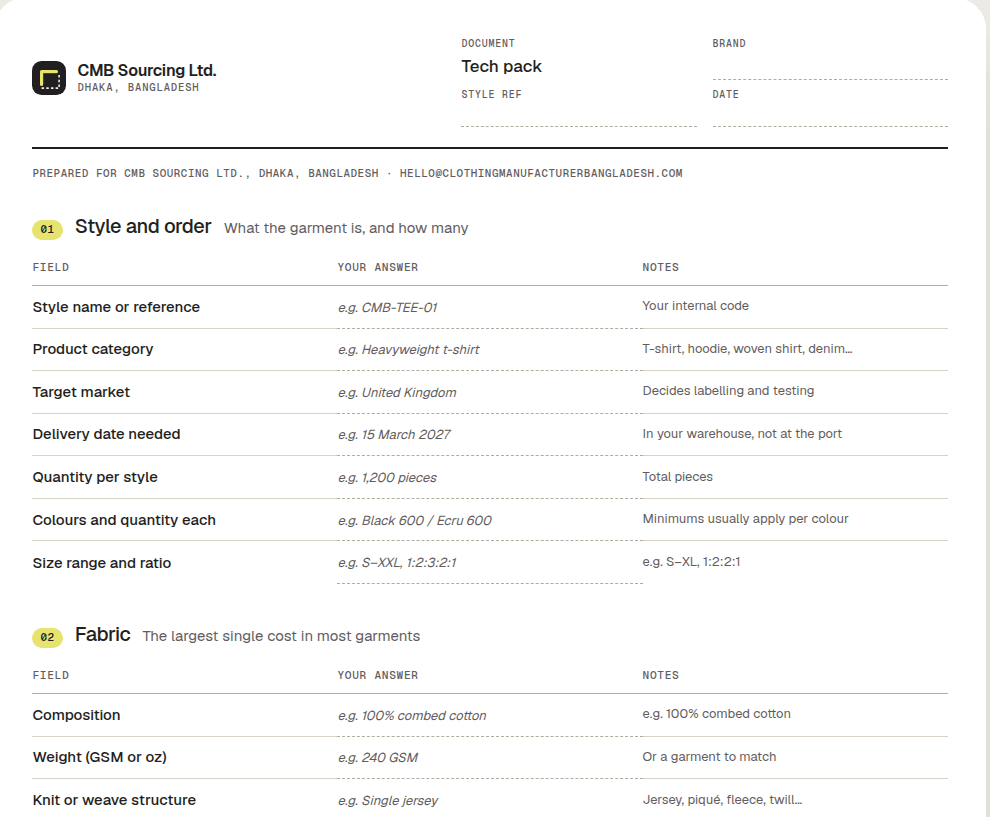
A tech pack is the document a factory builds your garment from. It is not paperwork for its own sake: every gap in it becomes a decision somebody in Bangladesh makes on your behalf, and those decisions surface as a fit problem, a wrong shade or a price you did not expect. This guide covers what goes in one, in the order a merchandiser reads it, and includes a free template you can fill in.
Download the tech pack template (CSV) — open it in Excel, Google Sheets or Numbers. Fill what you can and leave the rest blank; blanks tell us where you want a recommendation.
1. Style and commercial basics
Start with what the garment is and what the order looks like: style name, product category, target market, quantity per style, quantity per colour and the size range with a ratio. Quantity per colour matters more than total quantity, because fabric minimums and set-up costs apply per colour. Add your target price and your required delivery date. Naming a price is not a weakness; it lets a supplier tell you immediately whether the specification and the price can meet.
2. Fabric
Specify composition, weight in GSM or ounces, knit or weave structure, and any finish. If you want a certified fibre such as GOTS organic or GRS recycled, say so here, because it changes the supply chain and requires transaction certificates for your shipment. Give colour references as Pantone TCX numbers rather than screen colours or names: "navy" means a dozen different shades. If you do not know the weight, describe a garment you like and we will match it with knit-down swatches.
3. Trims
List thread, ribs, cuffs, collars, zips, buttons, snaps, elastic, drawcords and interlining, with colours and sizes. Branded zips and custom buttons are a real cost line and have their own minimums, so decide early. For anything that touches skin, note if your market restricts nickel release or specific chemicals.
4. Measurements
This is where most disputes start. Attach a size chart in centimetres for every size you will sell, state the base size the pattern is made in, and give tolerances, for example plus or minus one centimetre on body length. If you have a garment whose fit you like, send it: a physical reference removes more ambiguity than three pages of description.
5. Construction
Note seam types by seam, stitches per inch, bar tack positions and hem depths. If you are not sure, say what matters to you, such as a flat seam that will not chafe, and let the factory propose the construction. Written intent is more useful than a wrong specification copied from another tech pack.
6. Branding and labelling
Cover neck label type, care label content and languages, hang tags, and any print or embroidery with method, size and placement measured from the high point of the shoulder. Send artwork as vector files. Label content is also a legal matter: fibre composition in the right language, country of origin, and for some markets an importer identity, a tracking label or a sorting mark. Our market guides list what each country requires.
7. Packing
State whether garments ship folded or hanging, the polybag type, carton assortment, barcode format and carton marks. Packaging is not a detail: in Germany, Italy, Denmark and the UK the importer pays a fee based on the packaging placed on the market, so lighter and recyclable choices made here save money later.
8. Compliance
List the tests your buyer or market requires, such as shrinkage, colour fastness or restricted substances, and any audit the factory must hold. For children's clothing, note the rules that apply in your market, including drawstring safety and flammability. Ask for the origin documents you will need at import.
What happens after you send it
A merchandiser reads the tech pack, asks about the gaps, and returns a costing. Once you approve it, we make a proto sample, then a fit sample, then a size set, and finally a pre-production sample in bulk fabric on the production line. That last sample is sealed and becomes the standard every inspection is judged against. A good tech pack shortens that cycle by removing the questions that would otherwise take a day each to resolve.
Fill in what you can and send it to us. If you only have sketches, send those instead: our sample room can build the pattern and turn it into a working tech pack you own.