In short
Most big high-street brands do. Their own supplier lists, read on 17 October 2026, name 194 Bangladeshi sites for Next, 188 for H&M Group, 168 for Lidl, 142 for Primark, 67 for Tesco, 50 for Gap and 45 for UNIQLO’s owner. Inditex, owner of Zara, publishes no country count, and adidas lists no primary supplier there.
Want a costing for your own style? Send us your enquiry
Most of the big high-street names do, and they say so in their own supplier lists. Read on 17 October 2026, those lists name 194 manufacturing sites in Bangladesh for Next, 188 for H&M Group, 168 for Lidl’s textiles and shoes, 142 for Primark, 67 for Tesco, 50 for Gap and 45 for Fast Retailing, the owner of UNIQLO. Inditex, which owns Zara, publishes no count by country, and adidas lists no primary supplier there.
These are the brands’ own lists, not our clients. CMB Sourcing Ltd. is a buying house in Narayanganj, Dhaka, and none of the brands on this page buys through us.
Where do these numbers come from?
Only from documents each company published itself: a factory list, a supplier map, an annual report or a modern slavery statement. We opened every list on 17 October 2026 and counted the rows whose country is Bangladesh. Where a list repeats a factory once for each supplier that uses it, as Next’s does, we counted each site once.
Two kinds of brand are not counted. Some publish their list only as a map on Open Supply Hub, a free public map of production sites, sometimes shown inside their own website, where it can be filtered by country but not read as a single document; Marks & Spencer, C&A, Mango and Levi Strauss & Co. do this. Others publish no factory list at all. For both, the table gives what the company does say, and leaves the count empty rather than estimating it.
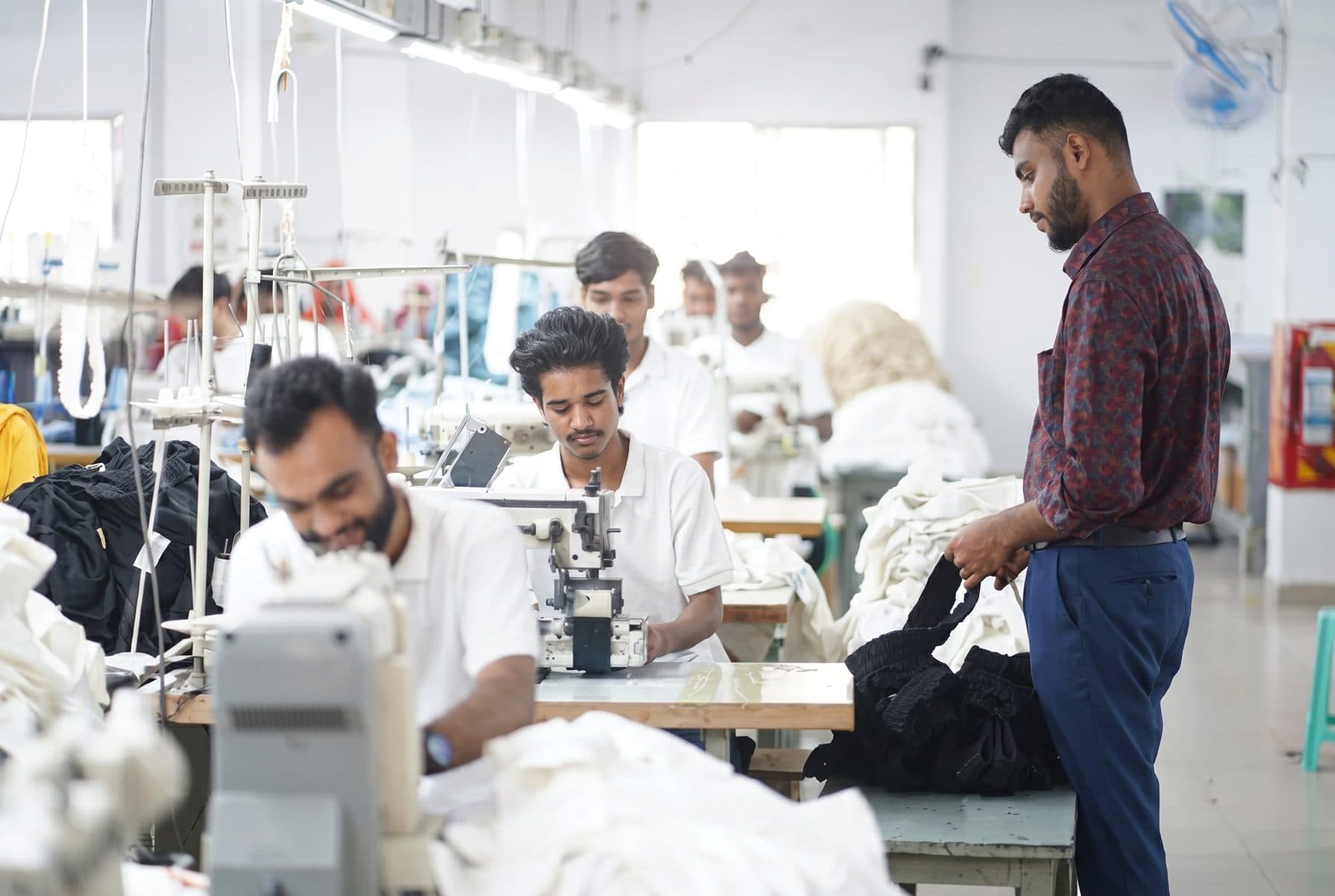
Which brands list factories in Bangladesh?
| Brand or group | Listed in Bangladesh | Listed in all countries | List date | Source |
|---|---|---|---|---|
| Next | 194 manufacturing sites | 1,478 | February 2026 | Next Tier 1 list |
| H&M Group | 188 factories | 1,547 | August 2026 | H&M Group supplier list |
| Lidl (textiles and shoes) | 168 producers | 463 | Deliveries in 2025 | Lidl tier one textile suppliers |
| Primark | 142 factories | 797 | November 2025 | Primark Global Sourcing Map |
| Target Corporation (US) | 86 facilities (58 Tier 1, 28 Tier 2) | 4,542 | 25 February 2026 | Target factory list |
| Tesco (F&F clothing and home) | 67 Tier 1 factories | 426 | End of August 2025 (published April 2026) | Tesco disclosure list |
| Canadian Tire Corporation (own brands) | 61 Tier 1 factories | about 300 | 6 January 2026 | Canadian Tire supplier list |
| PVH (Calvin Klein, Tommy Hilfiger) | 55 Level 1 factories, plus 16 Level 2 | 741 Level 1 | July 2026 | PVH suppliers disclosure |
| Gap Inc. | 50 Tier 1 factories | 552 | February 2026 | Gap Inc. factory list |
| Fast Retailing (UNIQLO) | 45 sites, 27 of them garment factories | 670 | 31 August 2026 | Fast Retailing production partner list |
| Kmart Australia (apparel) | 38 finished-goods factories, plus 84 processing facilities | 249 finished-goods | November 2025 | Kmart factory list |
| VF Corporation (The North Face, Vans) | 27 Tier 1 factories, plus 21 Tier 2 | 203 Tier 1 | January–June 2026 | VF factory disclosure list |
| adidas | None among primary suppliers; 1 licensee factory and 1 wet-process supplier | 455 primary suppliers | 1 July 2026 | adidas supplier list |
| Inditex (Zara) | No country count published; Bangladesh is one of its 10 supplier clusters | 6,684 (all tiers) | Annual Report 2025 | Inditex Annual Report 2025 |
| Mango | No country count published; second supplier market by volume after China | more than 2,700 | Financial year 2025 | Mango supply chain statement |
| Levi Strauss & Co. | No country count published; list on Open Supply Hub | about 32 countries | Fiscal year 2025 | Levi Strauss Form 10-K |
| Marks & Spencer | List on Open Supply Hub only; not counted here | n/a | Updated at least twice a year | M&S supplier map |
| C&A | List on Open Supply Hub only; not counted here | n/a | Updated every six months | C&A factory list |
| Walmart | No public factory list found | 26,300 active facilities disclosed by suppliers (all products) | FY2026 ESG report | Walmart ESG report |
Sportswear is covered separately. Our guide to where Nike, lululemon and Gymshark make their clothes found no Bangladeshi factory on Nike’s July 2026 map, two Tier 1 facilities on lululemon’s May 2026 list and five Bangladeshi garment factories on Gymshark’s 2025 list.
Why the counts are not directly comparable
Each company decides what goes on its list, so a larger number does not always mean more business.
- Tiers. Some lists show only the factories that sew the finished product (Tier 1). Others add laundries, printers and dye houses, or the fabric mills behind them. Kmart Australia lists 84 Bangladeshi processing facilities next to its 38 finished-goods factories.
- Products. H&M Group’s list covers home textiles, shoes and accessories as well as clothing, and Target’s includes cosmetics factories. Tesco’s covers F&F clothing and home; Lidl’s covers textiles and shoes.
- Time. Lidl lists producers that delivered at any point in 2025. Most others list factories active on one date.
- Size. A count says nothing about volume. Primark’s map lists 142 factories in Bangladesh, 18% of its 797, but they employ 458,689 of the 763,635 workers the map records, or 60%. Next lists far fewer factories in Bangladesh than in China, yet its modern slavery statement puts 33% beside Bangladesh and 28% beside China, without saying what the percentage measures.
Does Zara make clothes in Bangladesh?
Inditex, which owns Zara, Massimo Dutti and Pull&Bear, has not published a country count, and we found no public factory list from it. Its Annual Report 2025 says its supply chain had 6,684 factories across all tiers in 49 markets, 3,240 of them sewing factories, and that its suppliers are organised into ten clusters: Spain, Portugal, Morocco, Türkiye, India, Bangladesh, Pakistan, China, Vietnam and Cambodia. It breaks factory totals down only by region and by process, with 4,133 in Asia and the rest of the world. The same report lists 85 Inditex employees in Bangladesh. So the group that makes Zara sources from Bangladesh, but it does not say how much.
H&M, Next and Primark: the longest Bangladesh lists
Next names the most. Its Tier 1 list, produced in February 2026, has 194 Bangladeshi sites out of 1,478, behind China (656) and India (234). Its modern slavery statement for the year to January 2026 says Next sources from 33 countries through 728 active Tier 1 product suppliers, and that more than 150 of its supplier factories in Bangladesh have reached 100% safety remediation, recognised by the RMG Sustainability Council or the Accord.
H&M Group’s August 2026 list has 188 factories in Bangladesh out of 1,547, fourth after Mainland China (466), Türkiye (278) and India (220). Of the 188, 134 are marked as manufacturing units; the others are processing or component units. They belong to 105 suppliers.
Primark’s Global Sourcing Map, last updated in November 2025, lists 797 factories in 15 countries. Bangladesh has 142, second to China’s 404.
UNIQLO, Gap, PVH and Levi’s
Fast Retailing, UNIQLO’s owner, publishes one combined list, dated 31 August 2026, of garment factories, the sites they send work to, core fabric mills and makers of labels and trims. Bangladesh has 45 of its 670 entries, third after China (346) and Vietnam (112): 27 garment factories, six processing sites, six fabric mills and six trim makers.
Gap Inc.’s February 2026 list covers Gap, Old Navy, Banana Republic and Athleta and, the company says, nearly all of its spend with Tier 1 factories. Bangladesh has 50 of 552 factories, fifth after Vietnam, India, Indonesia and Cambodia. Nineteen of the 50 are listed for denim and woven bottoms.
PVH, owner of Calvin Klein and Tommy Hilfiger, lists 55 Bangladeshi finished-goods factories active in July 2026, 50 for apparel and five for accessories, plus 16 fabric and trim suppliers.
Levi Strauss & Co. publishes its factory list on Open Supply Hub. Its Form 10-K for fiscal 2025 says it sourced from contract manufacturers in about 32 countries, with no more than 30% from any one country, and names Bangladesh among the countries where many of its products are made.
Want a factory you can check?
We name the factory that will make your order in writing before production, with its address, certificates and audit reports. Tell us what you want to make.
Supermarkets and discounters: Lidl, Tesco, Walmart and ALDI
Lidl’s list of textile and shoe producers that delivered in 2025 has 168 in Bangladesh and 171 in China, out of 463. No other country comes close; Pakistan is next with 43.
Tesco’s list of Tier 1 F&F clothing and home factories active at the end of August 2025, published in April 2026, has 67 in Bangladesh out of 426, second to China’s 159. Its separate list of fabric mills and spinners names 34 Bangladeshi mills.
Walmart publishes no factory list that we could find. Its FY2026 ESG report says suppliers disclosed 26,300 active facilities across all its products, and names apparel from Bangladesh as one of ten priority supply chains. ALDI SÜD’s textiles page says more than 80% of its own-label clothing and home textiles are made in Asia and that its sustainability teams work from Hong Kong and Bangladesh; it gives no factory count.
Australia and Canada: Kmart and Canadian Tire
The apparel list Kmart Australia published in November 2025 has 249 finished-goods factories. Bangladesh has 38 of them, second to China’s 129, plus 84 Bangladeshi processing facilities that its suppliers use. Canadian Tire Corporation’s list of Tier 1 factories for its own-brand clothing, footwear and accessories, last updated on 6 January 2026, has 61 in Bangladesh out of about 300, second only to China.
Which big brands list no factory in Bangladesh?
A few, mostly in sportswear and premium fashion. adidas’s list of primary suppliers and their subcontractors dated 1 July 2026 has 455 entries and none in Bangladesh. Its separate lists name one Bangladeshi licensee factory, which makes goods for a company licensed to use the adidas brand, and one Bangladeshi wet-process supplier of materials. Lacoste’s June 2026 list of 1,150 factories across its tiers has none in Bangladesh. Nike’s map showed none when we checked it in September 2026. We have not found a statement from any of the three explaining why, so we do not guess.
How can you check which brands a factory works for?
Anyone can check a factory’s claim in three places, free of charge.
- The brand’s own list. Open the list linked in the table above and search for the factory’s name or address. If the brand publishes it, the factory should be there.
- Open Supply Hub. Search the factory’s name on Open Supply Hub. Its profile shows which brands and other organisations have listed it, and when. Our guide to verifying factory certificates in Bangladesh explains how to read a profile.
- The International Accord. The Accord publishes a monthly list of the Bangladeshi factories its signatory brands use. Its report as of 30 September 2026 lists about 1,766 factories employing about 2.84 million workers. For each it shows how many signatories are active there, but not which ones.
A brand on a factory’s list proves that the factory made something for that brand at some point. It does not prove that the factory still does, that it made the product you want, or that it passed the brand’s last audit.
What does this mean if you are sourcing clothing?
It tells you that factories in Bangladesh make for most of the brands above. It does not tell you which factory suits your order.
- Be wary of logo walls. Factories and agents often show famous brand logos. Ask which products they made for each brand and in which year, then check the brand’s list.
- Match the factory to your size. A factory with lines set up for large high-street programmes plans around large repeat orders. Ask for its minimum per style and colour before you ask for a price.
- Ask for your own proof. The current audit report for the factory that will sew your order, and an inspection report on your goods, tell you more than any brand name.
Our guides to garment factories in Bangladesh and to Bangladesh’s garment exports show where the factories are and which countries buy most.
Are these brands our clients?
No. CMB Sourcing Ltd. does not supply, and has never claimed to supply, any of the brands named on this page. We place orders from 500 pieces per style and colour in our sister factory or an audited partner factory, and we name the factory to you in writing before production starts, so you can check it on Open Supply Hub and the brands’ lists yourself.
Questions buyers ask.
Does Zara make clothes in Bangladesh?
Yes, but Inditex, the group that owns Zara, does not say how much. Its Annual Report 2025 names Bangladesh as one of the ten countries where its suppliers are organised into production clusters, alongside Spain, Portugal, Morocco, Türkiye, India, Pakistan, China, Vietnam and Cambodia, and lists 85 Inditex employees in Bangladesh. It reports 6,684 factories across all tiers in 49 markets, 3,240 of them sewing factories, but breaks them down only by region, with 4,133 in Asia and the rest of the world. We found no public Inditex factory list that would let anyone count its Bangladeshi factories, unlike H&M Group, Primark or Next, which publish factory names and addresses. So the honest answer is that the group that makes Zara sources from Bangladesh, and that the share is not public. A label on the garment itself is the only way to know where one piece was made.
How many factories does H&M use in Bangladesh?
H&M Group’s supplier list of August 2026 names 188 factories in Bangladesh, out of 1,547 worldwide. That puts Bangladesh fourth by number of factories, after Mainland China with 466, Türkiye with 278 and India with 220. The 188 belong to 105 suppliers, and 134 of them are marked as manufacturing units; the rest are marked only as processing or component units. The list covers home textiles, shoes and accessories as well as clothing, and H&M Group says it is updated every quarter. It also gives each factory’s address, the number of years it has worked with H&M Group, its product types, its size band and whether a trade union exists there, so a buyer can check any factory that claims to make for H&M. A factory being on the list shows a relationship; it does not show which products it makes or how much.
Does UNIQLO make clothes in Bangladesh?
Its owner’s list says yes, at group level. Fast Retailing, which owns UNIQLO, publishes one production partner list for the group; the version dated 31 August 2026 has 45 entries in Bangladesh out of 670. They are 27 garment factories, six processing sites such as laundries, six fabric mills and six makers of labels and trims. Bangladesh is third on the list, after China with 346 entries and Vietnam with 112. Among garment factories alone, Bangladesh has 27 of 366. Most of the Bangladeshi entries are in Chattogram, Savar, Gazipur and Mymensingh. The company says it updates the list every six months, and the list does not say which of its brands, UNIQLO or another, each factory serves. Like the other brands on this page, Fast Retailing owns none of these factories; they are independent manufacturers that make to its specification.
Which brand buys the most clothing from Bangladesh?
No public source ranks brands by what they buy from Bangladesh, so nobody can answer this exactly. What the brands publish are factory lists, and by that measure Next names the most Bangladeshi sites of the lists we counted, 194 in February 2026, followed by H&M Group with 188 in August 2026, Lidl with 168 textile and shoe producers that delivered in 2025, and Primark with 142 in November 2025. Factory counts are a poor guide to volume, though: Primark’s Bangladeshi factories are 18% of its list but employ 60% of the workers it records, and Next’s statement puts 33% beside Bangladesh while listing more factories in China. Inditex, Walmart, Mango and Levi Strauss publish no Bangladesh count at all. Which countries buy the most is better documented, in Export Promotion Bureau figures by destination.
How can I check whether a factory really makes for a big brand?
Check the claim against the brand’s own records rather than the factory’s brochure. First, open the brand’s published factory list and search for the factory’s name and address; H&M Group, Next, Primark, Gap, Tesco, Target, PVH and Fast Retailing all publish one, linked in the table on this page. Second, search the factory on Open Supply Hub, a free public map of production sites, whose profiles show which brands and organisations have listed each site and when. Third, if the factory is a ready-made garment exporter, look for it in the International Accord’s monthly factory list, which shows how many signatory brands are active there but not which. If a factory claims a brand that does not list it, ask when and what it made for them. A listing proves a relationship at some point; it is not proof of current work, of the product you want or of a passed audit.
Sources
Checked . Rules and figures change, so confirm anything that affects your pricing.
Show all 27 sourcesHide the sources
- Next plc — Tier 1 manufacturing sites list, produced February 2026 (194 Bangladesh sites by site ID, of 1,478) (opens in a new tab)
- Next plc — Modern Slavery Transparency Statement to January 2026 (33 sourcing countries, 728 Tier 1 suppliers, Bangladesh 33% and 191 factories, China 28% and 768) (opens in a new tab)
- H&M Group — Supplier list, August 2026 version 1.2 (188 Bangladesh factories of 1,547; 134 manufacturing units; 105 suppliers) (opens in a new tab)
- H&M Group — Supply chain page linking the current supplier list (opens in a new tab)
- Lidl — Tier one textile suppliers, producers with deliveries between 1 January and 31 December 2025 (168 Bangladesh of 463), linked from Lidl GB’s supply chain transparency page (opens in a new tab)
- Primark — Global Sourcing Map, last updated November 2025 (142 Bangladesh factories of 797; 458,689 of 763,635 workers) (opens in a new tab)
- Target Corporation — February 2026 factory list, pulled 25 February 2026 (86 Bangladesh facilities: 58 Tier 1, 28 Tier 2, of 4,542) (opens in a new tab)
- Tesco — F&F and home factory disclosure list, Tier 1 active at end August 2025, published April 2026 (67 Bangladesh of 426; 34 Bangladesh mills on the Tier 2–3 list) (opens in a new tab)
- Canadian Tire Corporation — Tier 1 owned brand supplier list, last updated 6 January 2026 (61 Bangladesh factories) (opens in a new tab)
- PVH Corp. — Suppliers disclosure, active as of July 2026 (55 Level 1 of 741 and 16 Level 2 in Bangladesh) (opens in a new tab)
- Gap Inc. — Branded apparel factory list, February 2026 (50 Bangladesh factories of 552) (opens in a new tab)
- Fast Retailing — Production partner list, as of 31 August 2026 (45 Bangladesh entries of 670; 27 garment factories) (opens in a new tab)
- Kmart Australia — Published factory list, November 2025 (38 finished-goods and 84 processing sites in Bangladesh) (opens in a new tab)
- VF Corporation — Factory disclosure list, January–June 2026 (27 Tier 1 of 203 and 21 Tier 2 in Bangladesh) (opens in a new tab)
- adidas — Global supplier list, 1 July 2026 (455 primary suppliers and subcontractors, none in Bangladesh; one Bangladeshi licensee factory and one wet-process supplier) (opens in a new tab)
- Inditex — Annual Report 2025, Consolidated Statement of Non-Financial Information (6,684 factories in 49 markets, ten supplier clusters, 85 employees in Bangladesh) (opens in a new tab)
- Mango — California Transparency in Supply Chains Act statement for financial year 2025 (more than 400 suppliers and 2,707 factories in 35 countries; Bangladesh second by production volume) (opens in a new tab)
- Mango — Factories list page (published on Open Supply Hub) (opens in a new tab)
- Levi Strauss & Co. — Form 10-K for fiscal 2025 (about 32 sourcing countries, no more than 30% from one; Bangladesh named) (opens in a new tab)
- Levi Strauss & Co. — Supplier map (published on Open Supply Hub) (opens in a new tab)
- Marks & Spencer — Interactive supplier map (Tier 1 list published on Open Supply Hub, reviewed at least twice a year) (opens in a new tab)
- C&A — Suppliers’ factory list (published on Open Supply Hub, updated every six months) (opens in a new tab)
- Walmart — FY2026 ESG report, People in Supply Chains (26,300 active facilities; apparel from Bangladesh a priority supply chain) (opens in a new tab)
- ALDI SÜD Group — Textiles supply chain page (more than 80% of own-label garments and home textiles made in Asia) (opens in a new tab)
- Lacoste — Factories list, June 2026 (1,150 factories, none in Bangladesh) (opens in a new tab)
- International Accord — Factory disclosure report, Bangladesh, as of 30 September 2026 (about 1,766 factories, 2,837,130 workers) (opens in a new tab)
- Open Supply Hub — Free public map of production sites and the brands that list them (opens in a new tab)