In short
CMT means you supply fabric and trims and the factory cuts, sews and packs. FOB or full package means the supplier also sources materials and delivers finished goods to the export port, for one price per piece. CIF adds freight and insurance, and DDP delivers to your door with duties paid. First-time buyers usually start with full package.
Want a costing for your own style? Send us your enquiry
Under CMT you supply the fabric and trims and the factory cuts, sews and packs; under FOB or full package the supplier also sources the materials and delivers finished goods to the export port, for one price per piece. If you are placing a first order, start with full package, so one company is accountable for fabric, fit and delivery. When you ask a Bangladesh factory or buying house for a price, ask first what it includes: the models split the work, and the risk, differently, and a quote under one cannot be compared with a quote under another until both are rebuilt to the same total. This guide explains each model, shows what a “cheap” CMT price leaves out, and says which model suits which buyer.
CMT: cut, make, trim
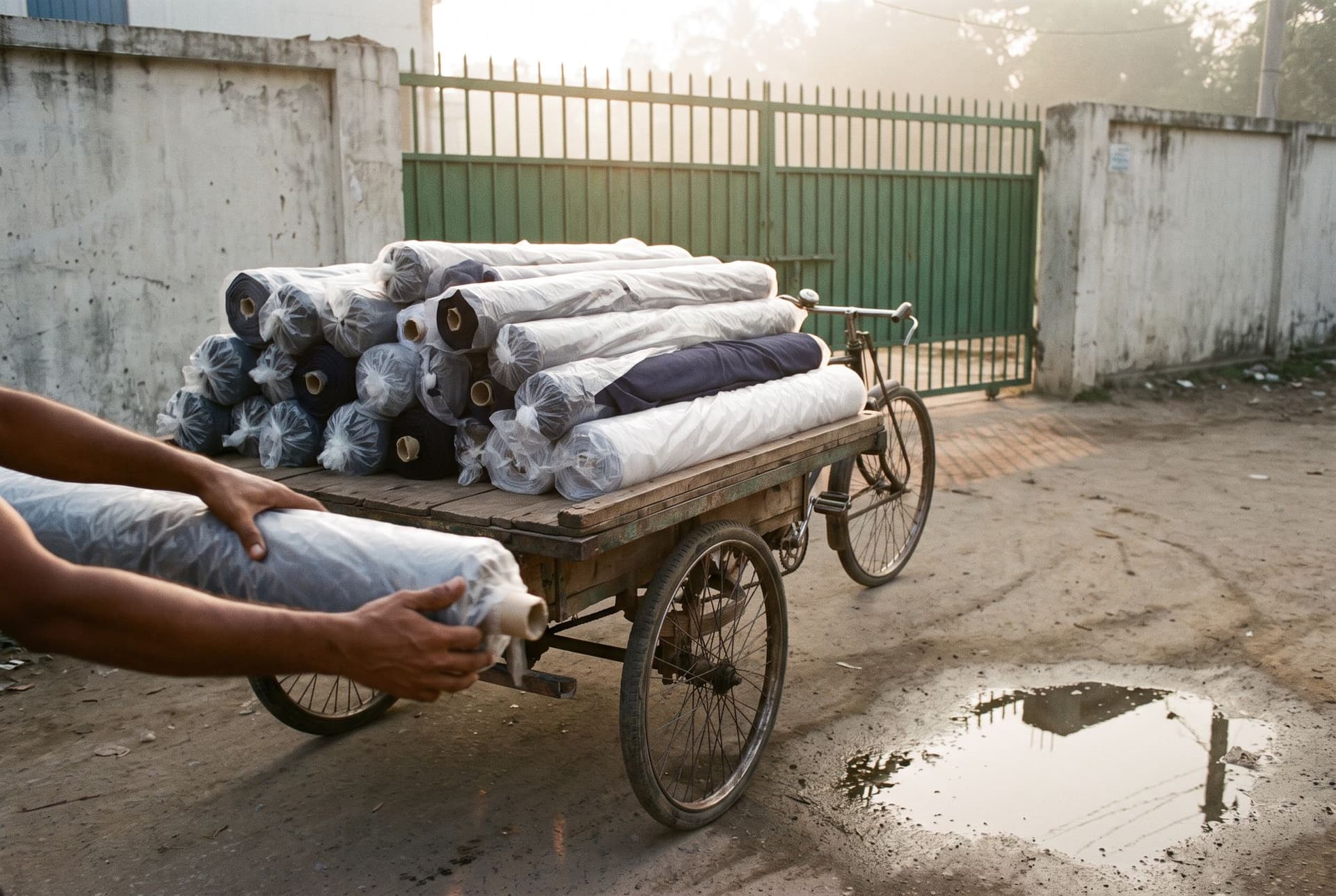
You buy and deliver the fabric and trims. The factory cuts, sews, finishes and packs. CMT prices look low because materials are not included, but you carry the risk of late or faulty fabric, the duty and freight on importing it into Bangladesh, and the administration of getting it to the factory on time.
Best for: brands with existing mill relationships or nominated fabric programmes, and the staff to run them.
FOB / full package
The supplier sources fabric and trims, produces, inspects and delivers the goods to the port of export. In Bangladesh, “FOB” and “full package” are often used to mean the same thing, though strictly FOB is a shipping term and full package describes the scope of work. You pay one price per piece and deal with one company, which is accountable for fabric, fit, quality and the ship date.
Best for: most brands, especially if you do not have a team in Bangladesh.
CIF and DDP
These extend full package further along the route. CIF includes sea freight and insurance to your destination port, though the insurance is only the minimum cover and the goods are at your risk from loading. DDP delivers to your door with import duties paid, the simplest option for smaller brands and e-commerce sellers, and the one where the assumptions about duty and VAT most need checking. Our shipping guide sets out what each term commits you to.
Our recommendation
If you are placing your first order in Bangladesh, start with full package, so one team is accountable for fabric, production and quality, and you learn what a garment really costs before you take on the fabric yourself. Move to CMT later if you have a nominated mill and want tighter control over fabric costs. Choose DDP if you have no freight forwarder and want the quoted price to be close to your landed cost.
Want a real costing for your style?
Send the tech pack or a reference garment with your quantity and market. We reply within one working day, and the costing shows what sits inside the price.
What each price actually includes
| Model | You supply | The price covers | Where the risk sits |
|---|---|---|---|
| CMT | Fabric, trims, often the pattern | Cutting, sewing, finishing, packing | You carry fabric quality, shortages and import delays |
| Full package / FOB | Tech pack or sample | Fabric, trims, sampling, production, inspection, export documents | The supplier carries material risk; you carry freight from the port |
| CIF | Tech pack or sample | Full package plus sea freight and minimum insurance to your port | Goods are at your risk from loading; you still clear customs and pay duty |
| DDP | Tech pack or sample | Everything to your door, duties paid | The supplier carries freight, clearance and duty risk |
Why a CMT price is not a lower price
A CMT price always looks cheaper than a full package price, because it excludes the largest cost in the garment. A 2023 study of cost sheets from four Bangladeshi factories put fabric at 42.6% of the FOB price of a basic t-shirt, trims and accessories at a further 12.3%, and cost of making at 15.2%. Applied to a t-shirt with an FOB price of US$5.00, a round figure for illustration rather than a quote, that is roughly US$2.13 of fabric and US$0.62 of trims and accessories that a CMT quote leaves out, against about US$0.76 of making that it includes. The CMT number on the quote is a fraction of what the garment will cost you once the fabric is bought, shipped, cleared and delivered to the factory.
To compare fairly, build the same total for each quote:
- Add your fabric cost, including wastage, to any CMT quote.
- Add trims, labels, polybags and cartons if the CMT price excludes them.
- Add the cost of getting fabric to the factory: freight, duty into Bangladesh and inland transport.
- Add the cost of your own time managing mills, testing and shortages.
- Then add freight and duty to both, so you are comparing landed cost.
Our cost guide shows the published split between fabric, trims and making for basic garments, which is a useful sanity check on any quote, and the landed cost calculator does the last step.
A note on the word FOB
The International Chamber of Commerce, which publishes the Incoterms rules, recommends FCA rather than FOB for containerised goods, because a container is handed to the carrier at the terminal, days before it is lifted on board. The garment trade quotes FOB anyway. What matters in practice is agreeing in writing where and when the goods are handed to your forwarder, and who is responsible between gate-in and loading.
Which model suits which buyer
- First-time buyers: full package, so one company is accountable for fabric, fit and delivery.
- Brands with a nominated mill: CMT, or full package with your nominated fabric, which keeps the factory responsible for making while you control the cloth.
- E-commerce sellers without a forwarder: DDP, so the quoted price is close to your landed cost.
- Large repeat programmes: FOB with your own freight contract, which usually beats a supplier’s freight rate at volume.
Questions to ask before you accept a price
- Which shipping term is this, and which port or address does it reach?
- Are sampling, laboratory testing and third-party inspection included, or listed separately?
- Who pays for fabric that fails testing, and who owns leftover fabric?
- What happens to the price if my quantity halves?
- Under DDP, which duty rate and tariff code did you assume, and who is the importer of record?
We quote a price per piece FOB, CIF or DDP; whoever you buy from, ask for sampling, testing and inspection to be listed separately so the price per piece means what it says. Compare the options on our services page, or send a tech pack for a costing.
Questions buyers ask.
What does CMT mean in clothing manufacturing?
CMT stands for cut, make, trim. You buy the fabric and trims and deliver them to the factory, which cuts, sews, finishes and packs the garments. The price covers labour and the factory's work, not materials, so it looks far lower than a full package price. The risk moves with the materials: you carry late or faulty fabric, shortages, the freight and duty on importing cloth into Bangladesh, and the job of getting it to the factory on time. As a guide to scale, a 2023 study of Bangladeshi cost sheets put the cost of making at 15.2% of a basic t-shirt's FOB price, against 42.6% for fabric. CMT suits brands with existing mill relationships or nominated fabric programmes, and the staff to run them. For a first order in Bangladesh, full package is usually the better start, because one team is then accountable for fabric, fit, quality and the ship date.
Is FOB the same as full package?
In the Bangladesh garment trade, people often use the two words to mean the same thing, but strictly they describe different things. Full package describes the scope of work: the supplier sources fabric and trims, makes samples, produces, inspects and prepares export documents. FOB is a shipping term: it says the price covers the goods up to loading at the port of export, and you pay freight from there. Most full package quotes from Bangladesh are given FOB, which is why the words blur. The distinction matters when you compare offers, because a full package price can also be quoted CIF, adding sea freight and minimum insurance to your destination port, or DDP, delivered to your door with duties paid. We quote FOB, CIF or DDP as you prefer, shipping from Chattogram sea port or Dhaka airport; from any supplier, ask for sampling, testing and inspection to be listed separately so the price per piece means what it says.
Should clothing be quoted FCA instead of FOB?
The International Chamber of Commerce, which publishes the Incoterms rules, recommends FCA rather than FOB for containerised goods. The reason is timing: a container is handed to the carrier at the terminal, days before it is lifted on board, and FOB strictly passes risk only at loading. The garment trade quotes FOB anyway, and changing the label matters less than agreeing the detail. Whichever term you use, put in writing where and when the goods are handed to your forwarder, and who is responsible between gate-in at the terminal and loading onto the vessel. Also confirm which port the price reaches. If you would rather not manage that handover at all, CIF moves the goods to your destination port, though its insurance is only minimum cover and the goods are at your risk from loading, while DDP delivers to your door with duties paid. Large repeat programmes often keep FOB with their own freight contract.
Sources
Checked . Rules and figures change, so confirm anything that affects your pricing.